Garden clearance permits and disposal rules in City of Westminster
If you are planning a garden tidy-up in Westminster, the messy part is often not the digging or pruning. It is the disposal. Bags of soil, cuttings, old fencing, a broken shed panel, maybe a pile of ivy that seemed to double in size overnight... and suddenly you are wondering what needs a permit, what counts as waste, and who is actually allowed to take it away.
This guide explains Garden clearance permits and disposal rules in City of Westminster in plain English, with a focus on what matters in real life: where garden waste can go, when a skip or vehicle permit may be needed, what disposal rules usually apply, and how to avoid the common headaches that catch people out. If you are comparing options for a larger clearance, you may also find it useful to look at garden clearance services and the broader services overview before making a decision.
Truth be told, Westminster properties can be a bit awkward for clearance work. Narrow streets, controlled parking, shared access, conservation considerations in some spots, and limited loading space all make disposal planning more important than most people expect. The good news? Once you understand the rules, the process becomes much simpler.
Table of Contents
- Why garden clearance permits and disposal rules in Westminster matter
- How it works in practice
- Key benefits and practical advantages
- Who this is for and when it makes sense
- Step-by-step guidance
- Expert tips for better results
- Common mistakes to avoid
- Tools, resources and recommendations
- Law, compliance, standards, and best practice
- Options, methods, or comparison table
- Case study or real-world example
- Practical checklist
- Conclusion
- Frequently asked questions
Why Garden clearance permits and disposal rules in City of Westminster Matters
Garden clearance sounds straightforward until you meet the rules around waste storage, loading, access, and transport. In Westminster, those details matter because space is tight and local streets are busy. A pile of green waste left in the wrong place can create complaints, block access, or lead to avoidable enforcement issues. And if a contractor is hauling waste, they need to do it properly too. There is no point cleaning up the garden if the disposal side turns into a problem later.
There are also practical reasons to take it seriously. The right disposal approach saves time, avoids repeat trips, and reduces the risk of cross-contamination between green waste and general rubbish. Anyone who has ever mixed soil, timber, and plastic bags into one heap knows how quickly a simple job becomes a slog. It is the kind of task that looks minor from the outside and turns into an afternoon of sorting, lifting, and head-scratching.
For homeowners, landlords, managing agents, and busy tenants, the main benefit is peace of mind. You know what can be removed, what needs special handling, and what to ask before booking a clearance. That is especially useful in central London, where access can be more complicated than the garden itself. A short walk from a terrace house to the nearest loading point can change the whole plan.
Expert summary: In Westminster, good garden clearance is not just about cutting back growth. It is about planning the waste route, checking access, separating materials, and making sure the disposal method fits the property and the street.
How Garden clearance permits and disposal rules in City of Westminster Works
At a high level, the process has three parts: identifying the waste, deciding how it will be removed, and checking whether a permit or permission is needed for the method you choose. Most garden waste itself does not need a special permit just to be thrown away. But the way you store, load, transport, or place that waste can trigger rules.
Here is the simple version. Green waste such as grass cuttings, leaves, hedge trimmings, branches, and small plant material is usually handled separately from bulky waste. Soil, rubble, treated timber, pots, broken furniture, and general household rubbish may need different treatment. A good clearance plan keeps these streams apart. It sounds fussy. It is. But it works.
If a skip is used, the skip placement may require permission depending on where it sits. On a road or footway, a permit may be needed; on private land, the permission issue is different and usually simpler. If a vehicle is parked for loading, waiting restrictions and bay suspensions may come into play. Westminster is not the place to assume you can just pull up anywhere and leave a lorry there all day. That usually ends with someone being unhappy.
For many households, the cleanest option is a direct load-and-go clearance, where the waste is removed efficiently without a long roadside stay. That works well for compact gardens, rear access properties, and jobs that can be staged in one visit. For larger clearances, a combined approach may be better: prune, bag, load, separate, and remove in phases.
If you also need ongoing upkeep after the main clearance, browsing garden maintenance, hedge trimming, or lawn mowing can help you plan the next step rather than letting the garden drift back into chaos by next month.
Key Benefits and Practical Advantages
A proper disposal plan does more than keep you compliant. It makes the job easier from start to finish.
- Cleaner site conditions: Less risk of debris spreading through paths, shared entrances, or neighbours' property.
- Better sorting: Green waste, soil, timber, and mixed rubbish can be handled more efficiently when separated early.
- Fewer access problems: Planning around Westminster streets, parking controls, and loading limits reduces delays.
- Lower chance of repeat handling: If waste is organised at source, it does not need to be lifted and re-lifted three times. Nobody enjoys that.
- More predictable cost: Clear waste streams and access details help with quoting and scheduling.
- Improved safety: Fewer trip hazards, less manual handling strain, and less chance of sharp objects being missed in the pile.
There is also a comfort factor. Once the last bag is gone and the path is swept, the garden feels lighter. You can see the space again. Even a small courtyard can look surprisingly fresh after an honest clear-out, especially on a bright London morning when the light finally reaches the back fence.
If sustainability matters to you, ask how waste is separated and handled. The service approach should ideally be sensible, not lazy. You can also read more about the company's values on recycling and sustainability.
Who This Is For and When It Makes Sense
This topic matters if you are dealing with more than a basic sweep-up. A light tidy does not usually raise many complications. But once the project includes branches, soil, old planters, overgrown hedging, dead plants, broken trellis, or leftover landscaping waste, the details start to matter.
It is especially relevant for:
- Homeowners preparing for a seasonal clear-out or renovation.
- Landlords restoring a neglected garden between tenancies.
- Letting agents and property managers who need a fast, tidy handover.
- Older residents who want the work done safely without heavy lifting.
- Busy families who simply do not have the time to deal with multiple waste runs.
- Anyone with limited access where waste must be moved carefully through a house, side return, or shared passage.
It also makes sense if you are doing follow-on work after a larger outdoor project. For example, a clearance after new landscape gardening or landscaping can leave a surprising amount of leftover material that is not quite general rubbish and not quite green waste either. That middle ground is where people get tripped up.
And yes, if the job includes anything woody or bulky, such as tree sections or thick limbs, a specialist approach may be better. The tree lopping and removal service is the sort of thing you think you might not need, until you absolutely do.
Step-by-Step Guidance
Here is a practical way to work through a garden clearance in Westminster without missing the obvious stuff.
- Walk the garden first. Look for branches, cuttings, soil, old wood, broken fixtures, dead plants, and anything sharp or heavy.
- Separate the waste streams. Keep green waste apart from mixed rubbish, timber, rubble, and anything treated or painted.
- Check access. Measure gates, side paths, steps, and the route to the vehicle. Small access issues are where jobs slow down.
- Decide the disposal method. Skip, direct load, man-and-van style removal, or staged collection. Choose the one that fits the site, not the one that sounds easiest on paper.
- Confirm whether a permit is needed. If waste containers or loading vehicles will sit on public land, permissions may be necessary.
- Prepare the area. Move fragile items, protect paving if needed, and clear away anything that should not be crushed or dragged.
- Load safely. Heavy items go first only if that suits the load plan; sharp or awkward pieces should be secured properly.
- Leave the site tidy. Sweep paths, check corners, and make sure no small debris has been left behind. Those little bits always show up later, usually under a shoe.
- Keep records if needed. For landlords or managing agents, it is sensible to keep a note of what was removed and how.
If you are using a professional service, the quote stage matters more than people think. Clear photographs and a short description of access can make the pricing more accurate. If you want to compare service detail and quote expectations, the page on pricing and quotes is a useful starting point.
Expert Tips for Better Results
After seeing many clearances handled in different kinds of gardens, a few patterns stand out.
1. Do the sorting before the lifting. It is faster to create separate piles at the start than to split them again halfway through. Once a pile is wet, flattened, and mixed, everything gets more annoying. A bit obvious, maybe, but still often ignored.
2. Keep wet green waste under control. Grass clippings and damp leaves get heavy quickly. On a drizzly Westminster day, a bag can feel twice the weight by the time it reaches the loading point.
3. Be honest about the volume. Overgrowth looks smaller when it is still standing. Once cut down, it spreads out. Many people underestimate how much space hedge trimmings or ivy actually take.
4. Watch for hidden waste. Old plant pots, broken edging, rusted wire, and half-buried rubble often turn up late in the process. That is normal, not a disaster, but it should be planned for.
5. Think about what happens after clearance. If you do not want the garden to slip back into disrepair, line up maintenance early. A clearance followed by a sensible maintenance routine is usually better value than a one-off rescue every year.
To be fair, the biggest mistake people make is treating clearance like a single event instead of part of a wider outdoor plan. A tidy garden stays tidy when someone keeps an eye on it.
Common Mistakes to Avoid
- Mixing all waste together: Green waste, soil, timber, and general rubbish often need different handling.
- Assuming no permit is ever needed: If a skip or vehicle occupies public space, check first.
- Forgetting access constraints: Westminster streets can be tight, and loading can take longer than expected.
- Leaving waste in shared areas: Front steps, communal courtyards, and pavements are not temporary storage.
- Ignoring hidden hazards: Broken glass, nails, and cut wire are easy to miss in overgrown areas.
- Underestimating the weight: Soil and wet clippings can be much heavier than they look.
- Skipping the tidy-up: A clearance is not finished if debris is still tucked into corners.
A small but important one: do not assume that anything "natural" is automatically simple to dispose of. A pile of soil and roots can create more hassle than a stack of light green clippings. Not glamorous, but very true.
Tools, Resources and Recommendations
You do not need a van full of specialist gear for every job, but the right basics help a lot.
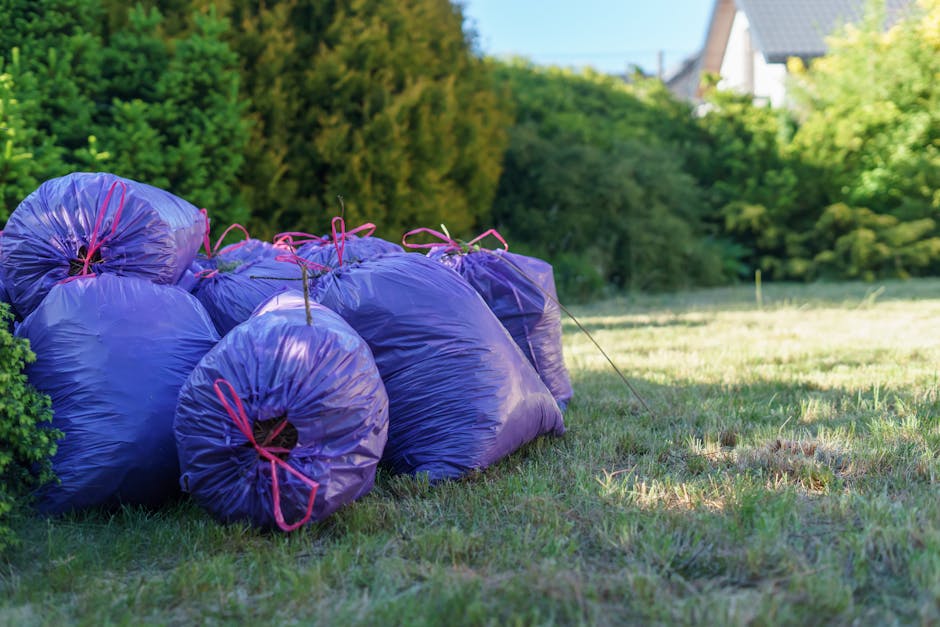
- Heavy-duty sacks or bulk bags: Useful for separating green waste from mixed material.
- Rakes, shears, and loppers: Better for controlling the waste at source, not after it has spread everywhere.
- Tarps or sheets: Helpful for dragging cuttings without spreading debris across paving.
- Gloves and sturdy footwear: Especially when dealing with thorny growth or hidden sharp edges.
- Wheelbarrow or sack truck: Useful where access is narrow or the load is awkward.
- Measuring tape: Surprisingly valuable when checking gates, paths, and parking space.
For businesses or busy households that want a smoother process, it is worth using a provider that explains waste handling, safety, and payment clearly. The pages on insurance and safety, health and safety policy, and payment and security can give you a better sense of how a well-run service is structured.
If you are unsure whether the job is really a clearance, a maintenance visit, or a mix of both, the services overview is a neat way to compare the options without overthinking it.
Law, Compliance, Standards, or Best Practice
Garden waste disposal in the UK sits within wider waste and property management expectations, so the safe approach is to work to current local rules and accepted best practice rather than guessing. Westminster may have its own operational requirements for skip placement, parking, and loading, and those can change depending on the street, time, and property type. If you are unsure, treat that as a prompt to check before acting.
In practical terms, compliance usually comes down to a few principles:
- Do not obstruct public space unnecessarily.
- Separate waste responsibly where possible.
- Use suitable containers and transport methods.
- Handle sharp, heavy, or treated materials carefully.
- Make sure any contractor is properly insured and works safely.
There is also a duty of care mindset that applies in practice: waste should be passed on to someone who can handle it lawfully and responsibly. That matters for garden waste just as much as for any other domestic or commercial waste stream. It is not the exciting part of the job, I know. But it is the bit that keeps things clean in every sense.
When best practice is followed, the whole process is easier for everyone: the resident, the contractor, the neighbours, and the person who does not want a bag of wet clippings sitting outside their front window until Tuesday.
Options, Methods, or Comparison Table
Different disposal methods suit different gardens. Here is a practical comparison to help you think it through.
| Method | Best for | Advantages | Potential drawbacks |
|---|---|---|---|
| Bagged green waste removal | Small to medium clearances | Simple, tidy, good for separated cuttings | Can be labour-intensive if access is awkward |
| Skip hire | Larger loads or mixed waste | Flexible capacity, convenient for ongoing projects | May need placement permission if on public land |
| Direct load-and-go clearance | Fast one-off removals | Quick turnaround, less clutter on site | Needs clear access and a well-planned load |
| Staged clearance with follow-up maintenance | Overgrown or neglected gardens | Best for restoring and then keeping control | Requires more planning upfront |
In Westminster, access often decides the winner. A method that looks cheap may become awkward if there is nowhere to place a container or stop a vehicle. A slightly more expensive option can actually be better value once the real logistics are included. That is one of those boring truths that turns out to be very useful.
Case Study or Real-World Example
Picture a typical first-floor flat with a small rear garden in Westminster. The space has been left for a few seasons, so the border is overgrown, the hedge is pushing through the boundary, and there is a pile of old pots, cracked canes, and broken timber at the back. The resident wants it cleared before family visits in the early evening, because the garden is used as a bit of a summer room when the weather behaves.
The sensible approach is not to pull everything out in one go and hope for the best. First, the accessible waste is sorted into green cuttings, woody material, and mixed debris. Then the route out of the garden is checked, because the side passage is narrow and has a few awkward bends. A vehicle can load nearby, but only if access and parking are planned carefully. Finally, the waste is removed in a way that avoids leaving piles on the pavement or dragging soil across the communal entrance.
What made the difference here was not brute force. It was preparation. The resident knew what was staying, what was going, and how the waste would be handled. The result was a garden that looked usable again rather than just "less bad," which is an honest milestone in many London clearances.
These are the sorts of projects where a focused clearance service, followed by lighter upkeep, usually gives the best long-term outcome. A one-off tidy can help. A plan helps more.
Practical Checklist
Use this before you book or begin a clearance.
- Identify all the waste types in the garden.
- Separate green waste from soil, timber, and mixed rubbish.
- Check whether any skip or vehicle placement may need permission.
- Measure access routes, gates, and any narrow passages.
- Note whether there are steps, shared areas, or fragile surfaces.
- Ask how waste will be sorted and disposed of.
- Confirm whether the service is insured and follows safe working practices.
- Decide whether you need clearance only, or clearance plus maintenance.
- Take photos before work starts if you are a landlord or property manager.
- Make sure the final tidy-up is part of the job, not an afterthought.
That last point matters more than people think. A clean finish saves the most hassle later.
Conclusion
Garden clearance permits and disposal rules in City of Westminster are really about one thing: getting the job done cleanly, safely, and without avoidable disruption. Once you know what counts as waste, how it should be separated, and when permissions may be needed, the process becomes much easier to manage. The key is to plan for access, sort the materials properly, and choose a disposal method that fits the property rather than fighting it.
If you are facing an overgrown border, a cluttered courtyard, or a garden that has quietly got away from you, there is nothing unusual about that. It happens. Westminster gardens can be lovely, but they can also be a bit demanding. The right approach turns a difficult clean-up into a sensible, manageable job.
Get a free quote today and see how much you can save.
And if you do only one thing after reading this, let it be this: check the waste route before the first cut is made. It saves time, money, and a fair bit of stress.
Frequently Asked Questions
Do I need a permit for garden clearance in Westminster?
Not usually for the clearance itself, but you may need permission if a skip, van, or loading vehicle will occupy public space. The exact need depends on where it is placed and how long it stays there.
What counts as garden waste?
Typical garden waste includes grass cuttings, leaves, hedge trimmings, branches, weeds, and plants. Soil, rubble, timber, and mixed household rubbish are often treated separately.
Can I put garden waste in my normal household bins?
Small amounts may sometimes be accepted depending on local arrangements, but larger volumes should be handled through a proper disposal method. It is usually better not to overload domestic bins.
Does wet garden waste weigh more?
Yes, quite a bit more in some cases. Damp clippings, leaves, and soil can become heavy fast, so load planning matters.
What should I do with soil from a garden clearance?
Soil is usually handled separately from green waste because it is denser and may need different disposal arrangements. It is best to flag it clearly before the job starts.
Are skips always the best option?
No. Skips suit some jobs very well, but they are not always ideal in tight Westminster streets. Direct collection or staged removal can be better where access is limited.
How do I know if I need a professional clearance service?
If the waste is bulky, access is awkward, there is a lot of sorting involved, or you want the job finished quickly and safely, a professional service usually makes sense.
Can garden clearance include tree branches and hedge cuttings?
Yes, and that is very common. Larger woody material may need to be handled as part of a broader pruning or removal plan, especially if the volume is high.
What is the main risk of doing garden clearance badly?
The most common problems are unsafe lifting, blocked access, mixed waste, missed debris, and disposal arrangements that do not fit the site. It can get messy surprisingly quickly.
How can I keep costs under control?
Give accurate access details, separate waste where possible, and be clear about what needs removing. Better information usually means a more accurate quote and fewer surprises.
Is garden clearance different from garden maintenance?
Yes. Clearance is about removing built-up waste and overgrowth. Maintenance is about keeping the garden in good shape after that work is done. They often work best together.
What should I ask before booking a service?
Ask how waste will be handled, whether any permit may be needed, what happens with mixed materials, and whether the service includes a final tidy-up. Those questions save a lot of back and forth later.
If you are ready to take the next step, speak with a team that understands both clearance work and the local realities of Westminster access. A well-planned job is calmer, quicker, and far less stressful. And honestly, that is what most people want in the end.